
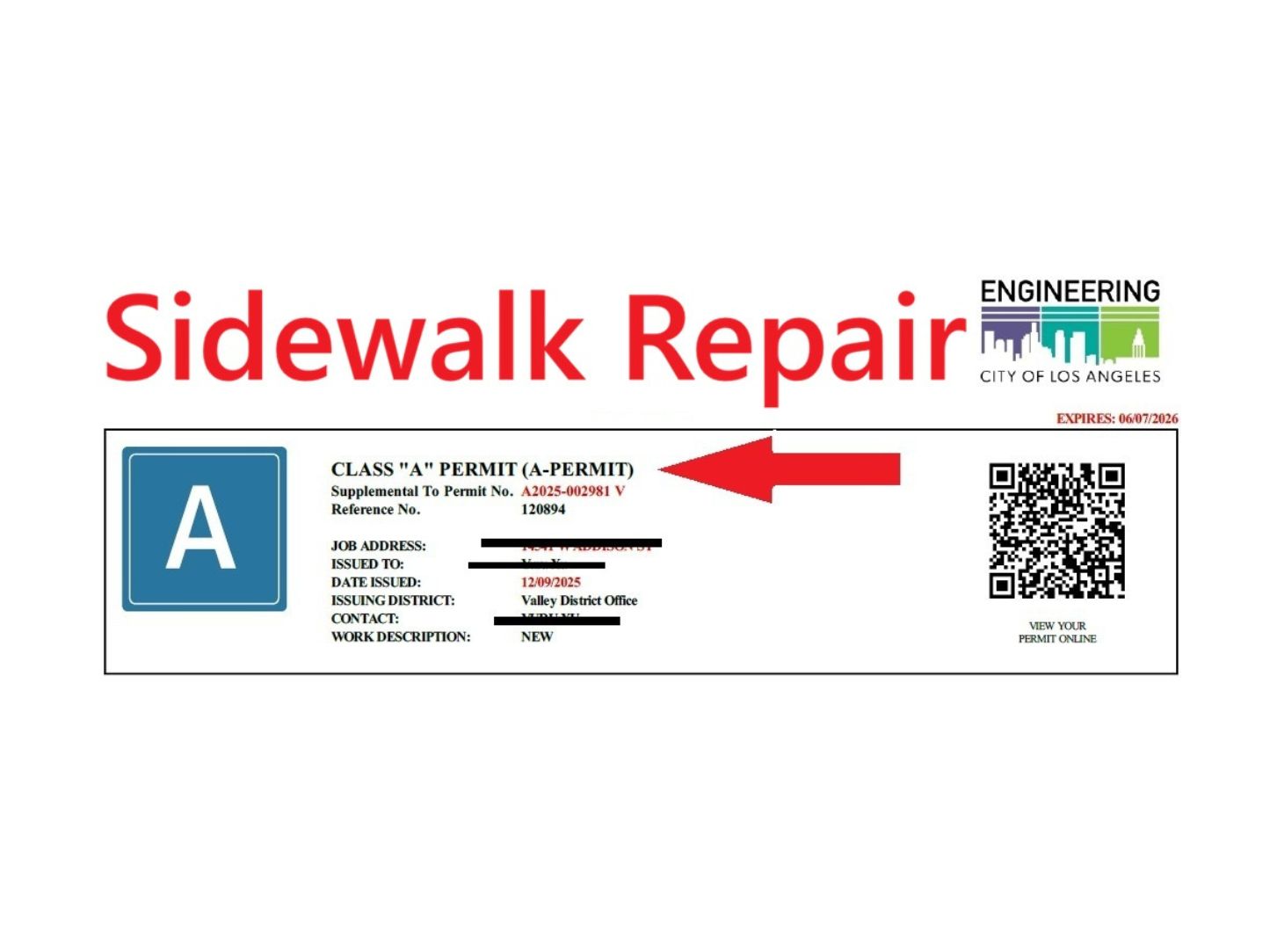

Ahh…Los Angeles….The sun, the surf… and the terrible sidewalks. If there is one thing that the City of Angels is notorious for, it’s our hazardous sidewalks. Years of poor planning, neglectful maintenance and lack of tree pruning have led our sidewalks to become hazardous to the everyday pedestrian.
Don’t let your sidewalk become a trip and fall lawsuit waiting to happen. Get it fixed. What’s the first step? Getting an A-Permit.
Who is responsible for sidewalk repairs in Los Angeles?
The age-old question in Los Angeles: Who is responsible for taking care of the sidewalks? It would seem reasonable that the city should fix the sidewalks. However, the wait time on a sidewalk repair request is DECADES long.
If you asked the city who is responsible for fixing the sidewalks, they would likely say the property owner is responsible. If you asked a property owner who is responsible, they would likely say the city is responsible.
Either way, if someone trips on the sidewalk in front of your property, you will most likely be sued for damages.
Don’t let it get to that point. Fix your sidewalk. And while you’re at it, get an A-Permit to fix that sidewalk.
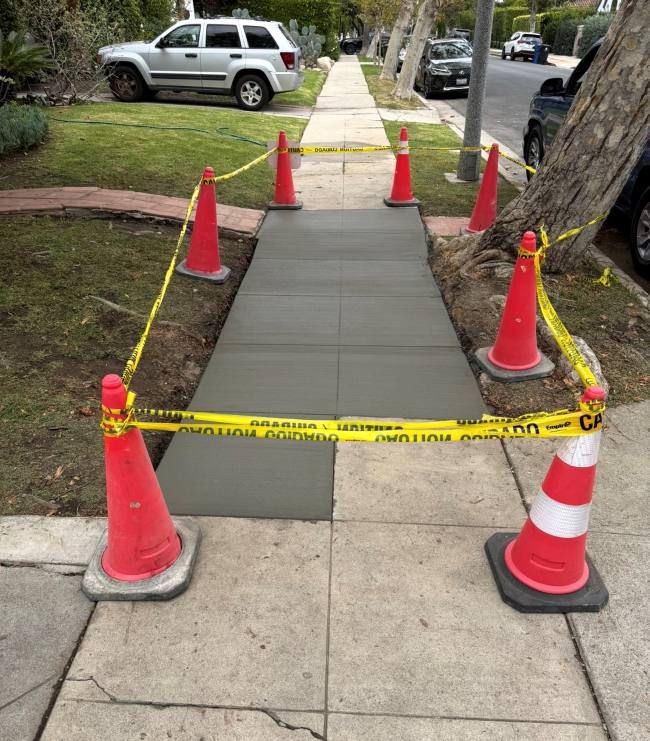
Why do I need an A-Permit to fix my sidewalk?
An A- Permit is required by the Los Angeles Department of Public Works, Bureau of Engineering (BOE). It allows minor street construction in the public right of way.
What is a public right-of-way, you may ask? Those are street easements that contain:
- City streets and lanes
- Alleys
- Parkways
- Sidewalks
- Public easements and unimproved streets
Basically, an A-Permit is the city’s stamp of approval on any project that is in the way of the public getting from point A to point B.
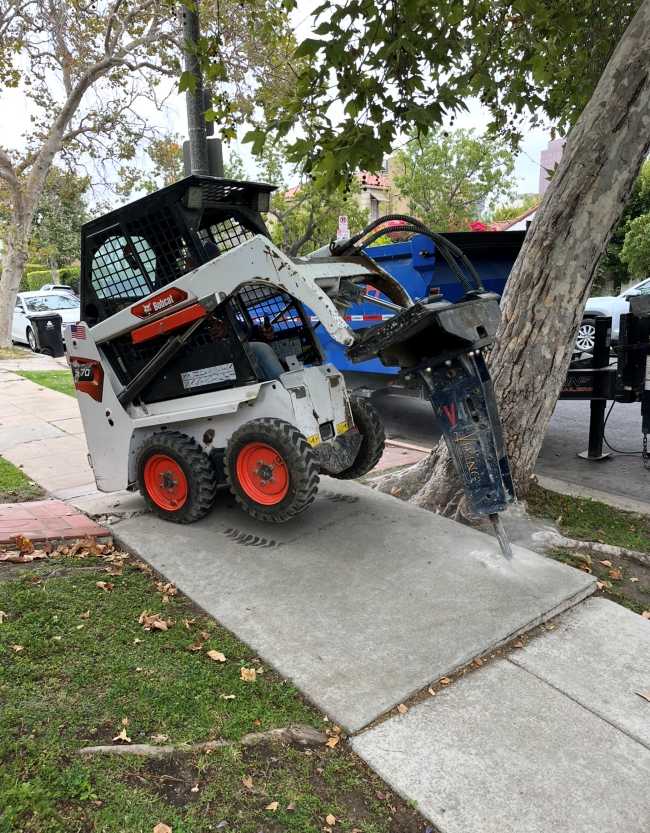
Who can apply for an A-Permit?
Anyone.
The city doesn’t have any requirements on who can apply for an A-Permit. Usually, it’s the property owner, their contractor or permit expeditor who pulls the permit. No proof of ownership is required.
What construction is covered by an A-Permit in Los Angeles?
An A-Permit covers construction work completed in the public right-of-way. An A-Permit includes, but is not limited to:
- New driveway installations
- Driveway repair
- Sidewalk installation
- Sidewalk repair
- Curb and gutter repair
- Installation of streetscape fixtures (bicycles racks, speed humps, parklets, parkways landscaping, etc.)
- Street tree wells
- Curb drains
- Street resurfacing/repairs for minor excavations
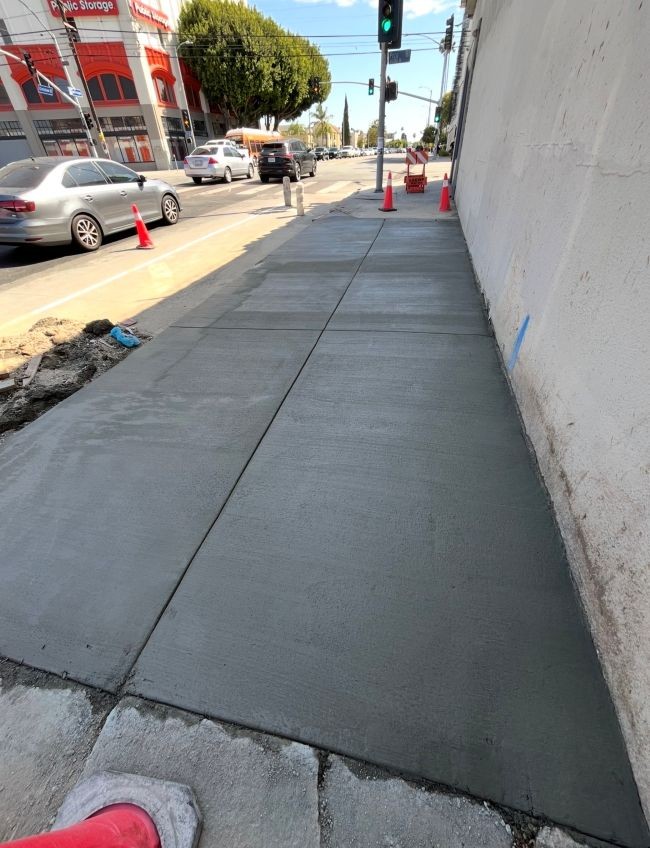
How can I apply for an A-Permit?
Any property owner (or anyone, really) can pull an A-Permit. The permit process can be completed online here or by applying in person with City staff at a District Office.
The permitting process can sometimes feel like a Kafka-esque process. That’s why most property owners will hire a licensed contractor or permit expeditor. Professional permit expeditors and licensed contractors have likely pulled thousands of permits during their career. They are the masters at the permitting process. You can always make your life a little easier by hiring one of these professionals to get your A-Permit completed in a timely manner.
How much does an A-Permit cost?
The price varies depending on what you are fixing, as an A-Permit covers a wide array of construction.
The basic permit fee is $375. However, you will also have to pay for the inspection and the scope of work. The larger the project, the larger the fee. You can find the city’s list of permit fees here.
How much does an A-Permit cost if a tree is damaging my sidewalk?
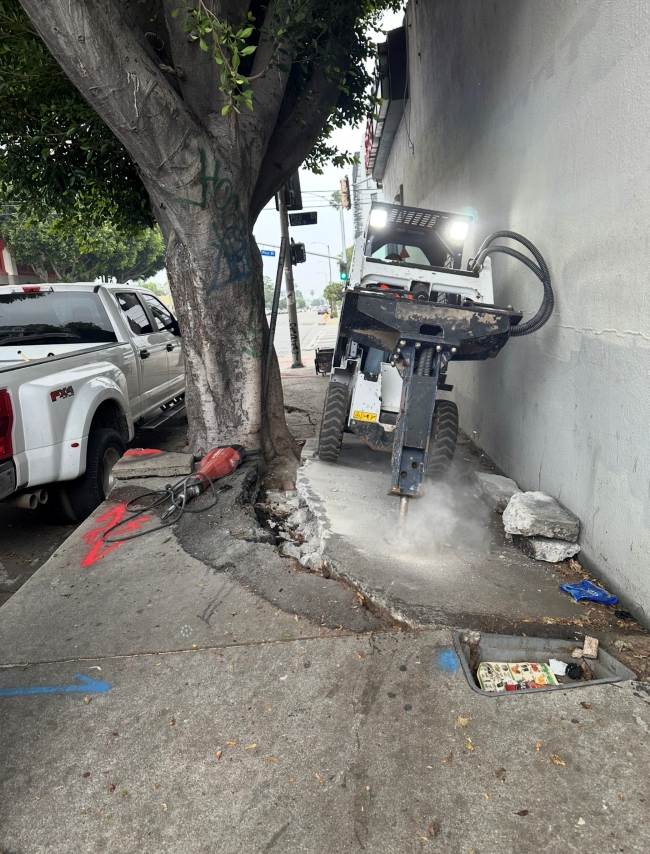
Contrary to popular belief, most sidewalk damage in Los Angeles is not caused by our infrequent earthquakes. They’re caused by city-owned or property owner-owned trees. Throughout the many building booms in Los Angeles, city planners allowed developers to plant quick-growing trees (ficus, anyone?) whose roots are now destroying our city sidewalks.
For that reason, if a city tree has damaged your sidewalk, you do NOT need to pay a permit fee for an A-Permit. The city DOES require a picture of the damaged area, so they can waive the fees.
To prevent tree roots from damaging your brand new sidewalk, the existing tree roots must be trimmed or the tree replaced. So, before you trim the tree roots, you will need a Street Tree permit, which is issued by the Bureau of Street Services. You get this permit AFTER you obtain an A-Permit.
As you can see, the permitting process can be long and involved. Again, that is why most property owners hire a professional to work through the process for them.
How long does an A-Permit last?
Much like that milk in your refrigerator, A-Permits have expiration dates. An A-Permit is valid from the construction start date specified on the approved permit until the stated expiration date.
An A-Permit can also be expired or voided if:
- The project is not started within six months.
- The project is not being prosecuted diligently
- If no work has been done 60 days after the date construction began.
The city does allow you to apply for an extension, if you show cause.
Ready to get that A-Permit? While anyone can apply for an A-Permit, you can easily avoid the headaches by hiring a professional. Call us today for a free estimate and let the experienced Pros get you that A-Permit.
Need Help With Your A-Permit Project?
A-Permit.com handles the entire permit process — from application to BOE inspection.