
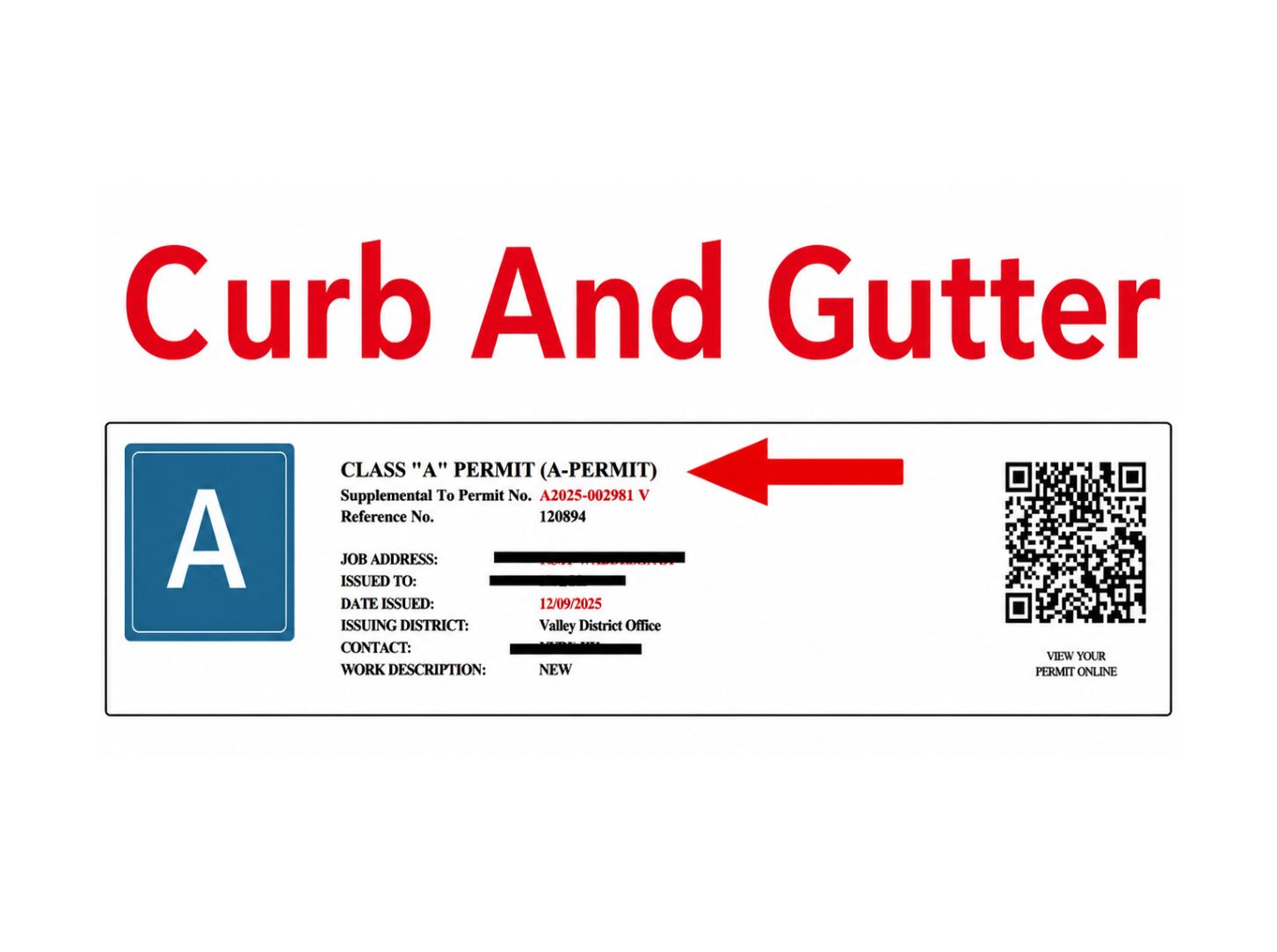

As a property owner in Los Angeles, you probably don’t give much thought to your curbs and gutters. You may notice them when you park your car too close to one and hit your tire on the curb, but otherwise, it’s just not a feature of your property that you worry about.
You probably don’t even realize that you are responsible for that property feature. You probably think the city is responsible for the curbs and gutters throughout the city. And that is where you would be wrong. Just as with sidewalks, the city isn’t going to fix your curbs and gutters anytime soon. Worse still, if someone trips and falls on your broken curb or gutter, you are going to be held responsible.
Don’t let that happen to you. Get an A-Permit and fix that curb and gutter.
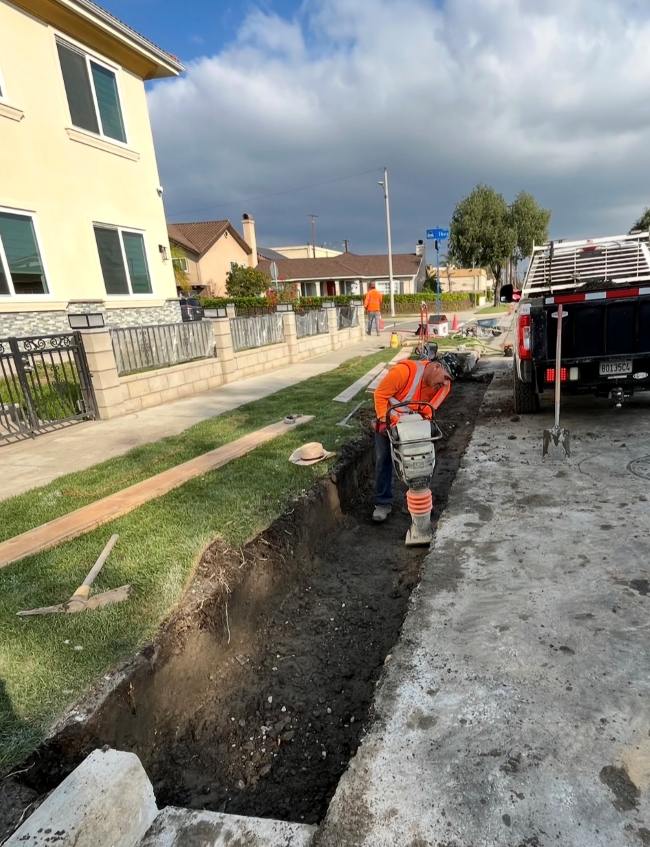
What is a curb and gutter in Los Angeles?
You pass by them every day, but you probably don’t even notice them.
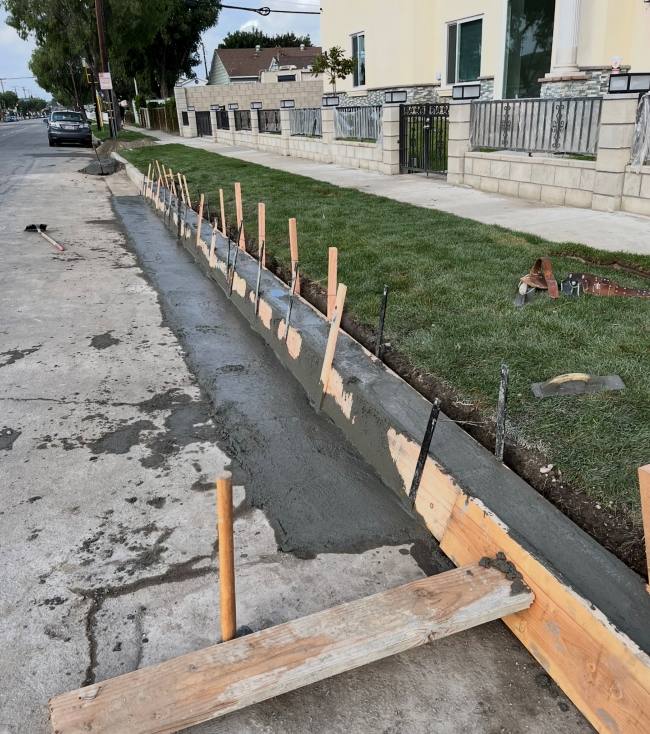
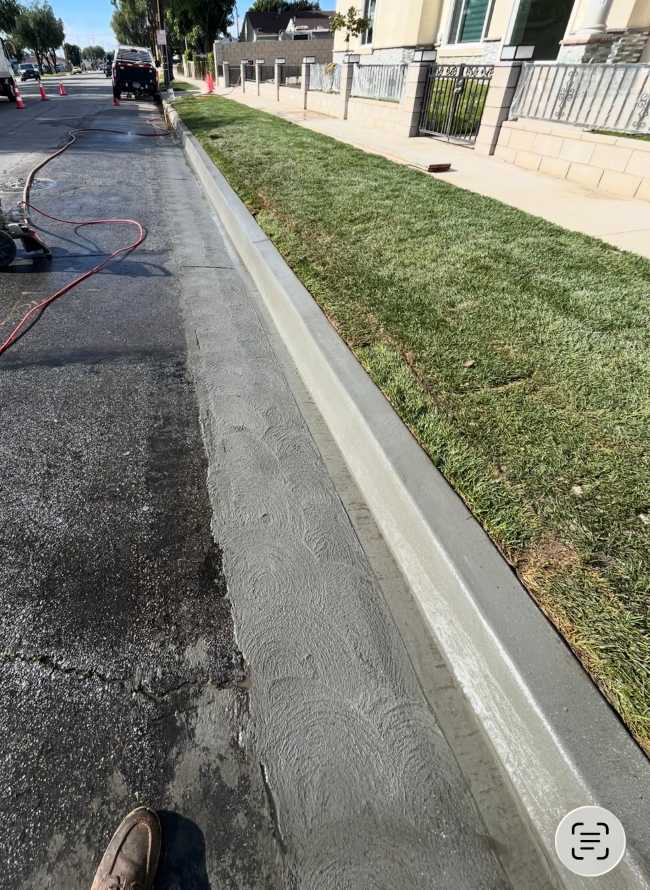
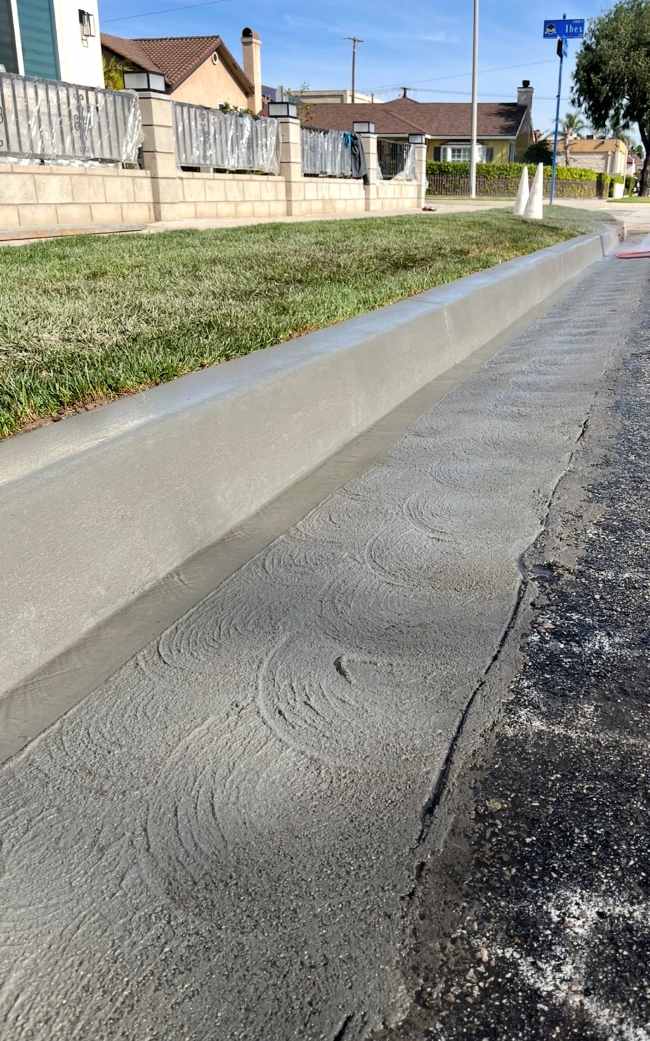
The curb is that edge of your sidewalk right before it drops to the street. The gutter is the concrete section just below before the pavement begins.
What does it do?
The main job of the curb and gutter system is to keep water from pooling up around your property and the streets and to whisk debris out and away from the area. If you are a business or homeowner, the last thing you want is water collecting on any part of your property. Water causes all kinds of damage thanks to erosion, flooding and other types of water damage. Not to mention, making the sidewalk slippery for pedestrians.
What causes curb and gutter damage in Los Angeles?
Trees.
Our tree-lined streets are beautiful, but nefarious. Over the past 100 years, city planners have allowed developers to plant fast-growing trees (like ficus and liquid amber) that take over the sidewalk and curbs and gutter systems.
Trees are the main culprit, but also another Southern California favorite – cars. If you are a business owner who has people routinely parking next to your curb, you know that over time, all the small impacts cars make on your curb will cause it to crack and break.
You may think the city will take care of the damage their own trees are doing to the sidewalk that the city originally installed. And that’s where you would be wrong. The wait list for any sidewalk repairs in Los Angeles is literally DECADES long.
Do I need an A-Permit to repair my curb and gutter in Los Angeles?
Yes.
A construction permit is the city’s stamp of approval on any project. An A-Permit covers a variety of smaller-scale construction projects that impinge on the public right-of-way. That means, if your project is going to be in the way of anyone driving, walking, biking, rollerblading, etc. down the street, you’re going to need an A-Permit.
A-Permits cover all sorts of projects including:
- Curb and gutter repair
- Curb drains
- Sidewalk repair
- Sidewalk installation
- Installation of streetscape fixtures (bicycles racks, speed humps, parklets, parkways landscaping, etc.)
- Street tree wells
- Street resurfacing/repairs for minor excavations
When you get an A-Permit, a city inspector will come out and assess what work will need to be completed and how it will need to be done. Usually, the inspector meets with your licensed contractor to hash this out.
Will the A-Permit be the only permit you need? Chances are…no.
If you are dealing with a tree that has damaged your curb and gutter, you will need to get a different permit to have the tree trimmed. Plus, you will have to have a different inspector come to check out the tree.
If you are installing a curb drain in your curb and gutter system and that drain just happens to take water to a city storm drain, congrats. That will be another, different permit and a special inspector.
Who can pull an A-Permit in Los Angeles?
Anyone.
The property owner does not need to pull the permit themselves. If you have hired a licensed contractor to complete your job or an experienced permit expeditor, they can pull the permits for you. If you have a friend or family member who appreciates a Herculean challenge, they can sort through the red tape for you.
How much does an A-Permit cost in Los Angeles?
It all depends on the project. The permit itself is just $375. However, you still need to pay for the inspections and the cost of the permit is based on the scope of the project. In other words, the larger the project, the higher the fee.
If you need to replace a sidewalk or curb and gutter damaged by a city-owned tree, the city will waive the permit fee. You still have to pay for the inspections.
If your project requires more permits (and it probably will), that will cost extra, as well.
You can find the city’s list of permit fees here.
Ready to hand the permit pulling to the professionals? Give us a call today for a free estimate.
Need Help With Your A-Permit Project?
A-Permit.com handles the entire permit process — from application to BOE inspection.